
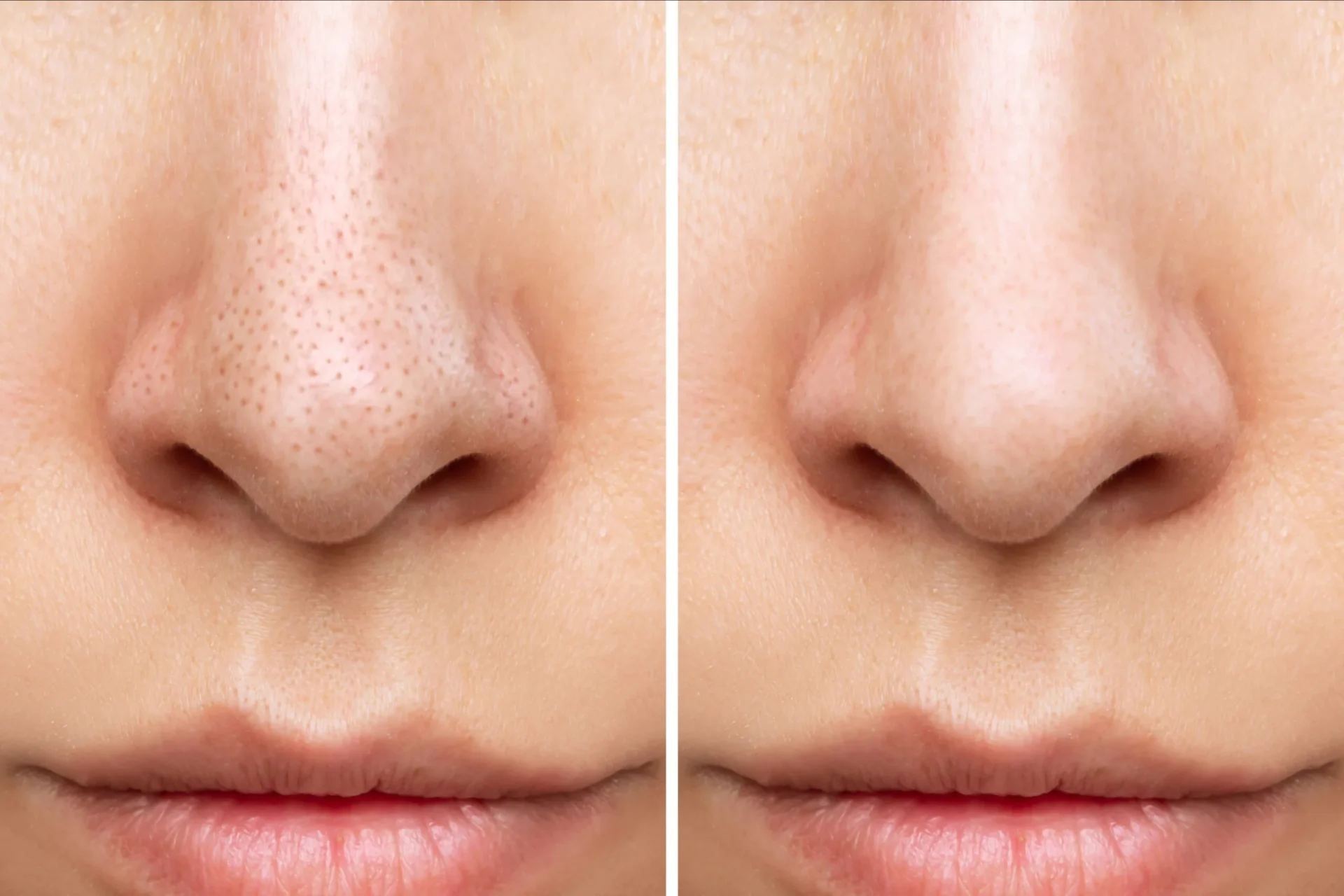
Squeezing blackheads feels like progress, but it is usually counterproductive and can lead to scarring or further breakouts. To effectively learn “how to get rid of blackheads,” you must address the root cause: pores clogged with oxidized oil and dead skin. In 2026, the gold standard remains using salicylic acid (BHA) to dissolve oil, followed by a consistent retinoid routine to regulate cell turnover. Avoid pore strips, which only remove the surface of the clog, and focus on non-comedogenic hydration to keep skin balanced.
**The short answer:** Blackheads are oxidized sebum (oil) plugs in open pores – not dirt. The most effective treatments are salicylic acid (BHA), retinoids (vitamin A derivatives), and consistent non-comedogenic skincare. Pore strips, physical scrubbing, and squeezing provide temporary results at best and skin damage at worst.
—
What Actually Causes Blackheads
Before you can clear them, you need to understand what you’re dealing with.
A blackhead (open comedone) forms when a hair follicle gets clogged with:
- Excess sebum (oil) produced by the sebaceous gland
- Dead skin cells that haven’t shed properly
Unlike a whitehead (closed comedone), the top of a blackhead is open to air. The dark color isn’t dirt – it’s oxidation. The same reason a cut apple turns brown when exposed to oxygen. Cleaning your face more aggressively does not fix blackheads, because they’re not caused by dirt.
The underlying drivers are excess oil production, slow cell turnover, and pore size (which is largely genetic).
—
Methods Compared: What Actually Works
| Method | How It Works | Effectiveness | Risk Level | Cost |
|—|—|—|—|—|
| Salicylic acid (BHA) | Oil-soluble acid that penetrates pores and dissolves sebum plugs | High | Low | Low |
| Retinoids (retinol / tretinoin) | Increases cell turnover, prevents pore clogging at the source | Very high | Moderate (irritation) | Low-Medium |
| Chemical exfoliants (AHA) | Dissolves dead skin cells on surface | Moderate | Low | Low |
| Professional extraction | Physical removal by a trained esthetician | High (temporary) | Low (if done properly) | Medium-High |
| Pore strips | Physical adhesive removal | Low (surface only) | Low-Moderate | Low |
| Physical scrubs | Manually removes surface cells | Low-Moderate | Moderate (micro-tears) | Low |
| Clay masks | Absorbs excess oil temporarily | Low-Moderate | Low | Low |
| Self-squeezing | Forces out contents manually | Temporary | High (scarring, infection risk) | Free |
The clear winner for long-term blackhead control is the combination of salicylic acid and a retinoid.
—
The Treatments That Actually Work
Salicylic Acid (BHA – Beta Hydroxy Acid)
Salicylic acid is oil-soluble, which means it can penetrate into the pore lining and dissolve the sebum plug from within. This is what makes it uniquely suited to blackheads compared to AHAs, which work on the surface.
How to use it:
- 0.5-2% concentration in a cleanser, toner, or leave-on exfoliant
- Leave-on formulas (toners, serums) work better than rinse-off cleansers
- Use 2-3 times per week to start; daily once skin adjusts
- Popular options: Paula’s Choice 2% BHA Liquid, The Ordinary Salicylic Acid 2% Solution
Retinoids
Retinoids (vitamin A derivatives) work at the cellular level – they increase skin cell turnover, which prevents dead cells from accumulating and clogging pores in the first place. They also reduce sebum production over time.
- **Retinol** (OTC): Gentler, slower acting, widely available
- **Tretinoin** (prescription): Stronger, faster acting, more irritation potential
- Apply at night; use a pea-sized amount; always follow with moisturizer
- Expect 6-12 weeks before noticeable improvement; irritation is common in the first month
Niacinamide
Niacinamide (vitamin B3) reduces sebum production and minimizes the appearance of pores. It’s not a standalone blackhead treatment, but it works well alongside BHA and retinoids. It’s also extremely well-tolerated.
—
What NOT to Do
**Don’t squeeze with your fingers.** Pushing down on a blackhead forces material deeper into the follicle, risks rupturing the pore wall, and introduces bacteria. The visible improvement is temporary; the damage can be lasting.
**Don’t use harsh physical scrubs daily.** Micro-tears from aggressive scrubbing impair the skin barrier and trigger more oil production – the opposite of what you want.
**Don’t over-cleanse.** Washing your face more than twice a day strips the skin barrier, prompts oil rebound production, and makes everything worse.
**Don’t rely on pore strips.** They pull out some of the visible plug, but not the underlying cause. Pores refill within days. Done aggressively, they can stretch pores and damage the surrounding skin.
**Don’t use heavy, pore-clogging products.** Check skincare and makeup products for “non-comedogenic” labeling. Oils like coconut oil and many heavy moisturizers actively worsen blackhead-prone skin.
—
A Daily Routine for Blackhead-Prone Skin
Morning:
- Gentle, non-comedogenic cleanser
- Niacinamide serum
- Light, oil-free moisturizer
- SPF 30+ sunscreen (non-comedogenic)
Evening:
- Gentle cleanser
- Salicylic acid toner or serum (2-3x per week)
- Retinol or retinoid (start 2x per week, build up)
- Non-comedogenic moisturizer
Keep it simple. More products don’t mean better results – consistent use of the right ones does.
—
When to See a Dermatologist
Consider a professional consultation if:
- Blackheads are widespread and persistent despite 3+ months of consistent care
- You have significant acne alongside blackheads
- You want a prescription retinoid (tretinoin is significantly more effective than OTC retinol)
- You’re interested in professional treatments: chemical peels, comedone extractions, or laser resurfacing
A dermatologist can also confirm you’re dealing with blackheads and not sebaceous filaments – a similar-looking but normal skin feature that doesn’t require treatment.
—
Realistic Timeline
| Timeframe | What to Expect |
|—|—|
| Week 1-2 | Skin adjusting; possible initial purging with retinoids |
| Month 1-2 | Fewer new blackheads forming; existing ones beginning to clear |
| Month 3-4 | Significant improvement in most people with consistent routine |
| 6+ months | Maintained clear pores with ongoing use |
Blackheads don’t disappear overnight, and they don’t stay gone without maintenance. But with the right routine, they become manageable – and eventually, barely noticeable.
