
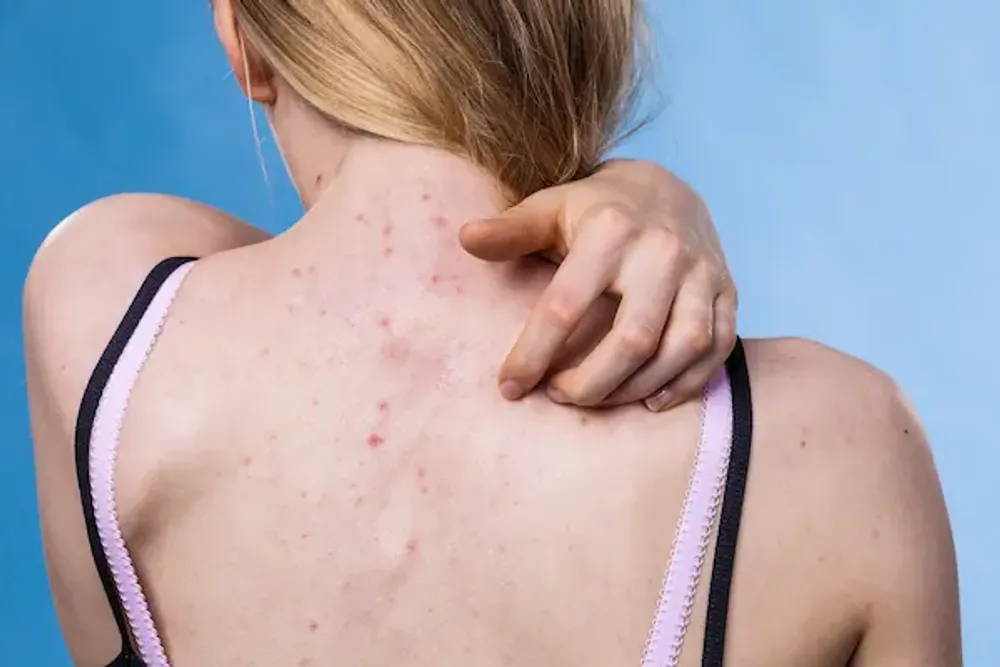
Back acne—or “bacne” as it’s commonly called—is just as frustrating as facial acne, maybe more so because it’s harder to reach and harder to treat. If you’ve been dealing with pimples, cysts, or breakouts across your back and shoulders, you’re far from alone.
Knowing how to get rid of back acne effectively usually involves a multi-step approach: using a benzoyl peroxide or salicylic acid body wash, exfoliating regularly, and washing workout clothes and bedding frequently. For more persistent cases, it may require professional intervention through prescription treatments like topical retinoids or antibiotics.
Why Does Back Acne Happen?
The back has a high density of sebaceous (oil) glands – second only to the face. When these glands overproduce oil, combined with dead skin cells and bacteria, pores get clogged and inflamed.
Common triggers:
| Trigger | How It Contributes |
|---|---|
| Sweat and friction | Occludes pores; sports equipment, backpacks, tight clothing |
| Hormonal fluctuations | Increase oil production – testosterone, stress hormones |
| Not showering post-workout | Sweat and bacteria sit on the skin |
| Dirty bedding | Bacteria and oil transfer to skin nightly |
| Heavy hair products | Oils from conditioners and serums drip onto the back |
| Diet | High-glycemic foods and dairy linked to acne flares |
| Genetics | Strong predictor of acne severity |
Step-by-Step: How to Clear Back Acne
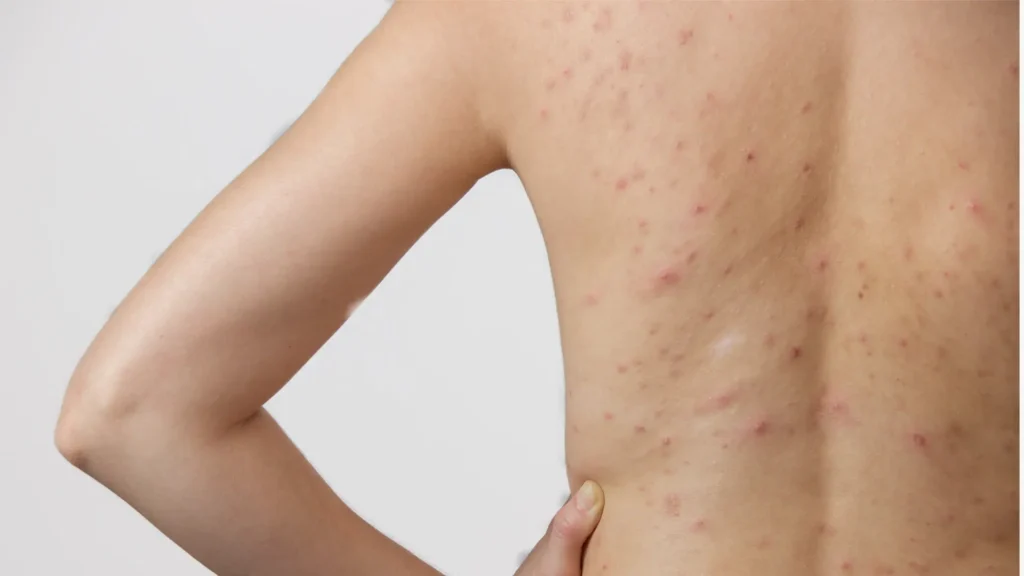
Step 1: Switch to an Acne-Fighting Body Wash
Your regular body wash is not designed to treat acne. Use one containing:
- Benzoyl peroxide (5-10%): Kills acne-causing bacteria. Most effective option for inflammatory acne (red, swollen pimples). Can bleach towels and clothing – rinse thoroughly.
- Salicylic acid (2%): Exfoliates inside the pore and reduces blackheads and clogged pores. Better for non-inflammatory, comedonal acne.
Apply, leave on for 1-2 minutes before rinsing – this gives the active ingredient time to work.
Step 2: Exfoliate Weekly
Dead skin cells pile up on the back and contribute to clogged pores. Gentle physical or chemical exfoliation 1-2 times per week helps clear the surface.
Options:
- A body scrub with fine particles (not harsh scrubs with large shells or seeds)
- A salicylic acid body lotion applied a few nights per week
- A glycolic acid or lactic acid body spray for chemical exfoliation
Don’t over-exfoliate – it strips the skin barrier and can worsen breakouts.
Step 3: Shower Immediately After Sweating
Sweat itself isn’t the problem – bacteria + sweat + clogged pores is. Showering within 30-60 minutes of exercising dramatically reduces the chance of sweat-related breakouts.
If you can’t shower, change out of workout gear and use a salicylic acid wipe or mist on the back as a stopgap.
Step 4: Change Bedding Frequently
Your pillowcases and sheets collect oil, sweat, dead cells, and bacteria – then press them against your skin for 8 hours. Wash bedding at least once a week, pillowcases 2-3 times per week if your acne is active.
Step 5: Watch Your Hair Products
If your back acne appears mainly on the upper back and shoulders where your hair falls, your shampoo and conditioner may be part of the problem. Many contain oils, silicones, and sulfates that clog pores when they drip down your back.
Fixes:
- Rinse hair forward over the tub or sink rather than letting it rinse down your back
- Wash your back after rinsing hair
- Look for “non-comedogenic” or “oil-free” hair products
Step 6: Wear Breathable, Loose Clothing
Tight synthetic fabrics trap sweat and cause friction – a major contributor to back acne (also called acne mechanica). Opt for loose, cotton-based clothing during exercise and for everyday wear when acne is active.
Topical Treatments for Active Breakouts
For active spots (not just prevention):
| Treatment | What It Does | Best For |
|---|---|---|
| Benzoyl peroxide gel/cream | Kills bacteria | Red, inflamed pimples |
| Salicylic acid spot treatment | Unclogs pores | Blackheads, whiteheads |
| Sulfur-based treatments | Dries excess oil | Mild breakouts |
| Tea tree oil (diluted) | Antimicrobial | Mild acne |
| Adapalene (Differin) | OTC retinoid; speeds cell turnover | Persistent, recurring acne |
Adapalene (Differin gel) is now available OTC and is one of the most effective topical treatments for back acne – it works over 8-12 weeks.
Diet and Back Acne
Diet doesn’t cause acne for everyone, but for some people it’s a clear trigger:
- High-glycemic foods (white bread, sugar, processed snacks) spike insulin, which stimulates oil production
- Dairy – particularly skim milk – has been linked to acne flares in multiple studies
- Whey protein – common in gym supplements – is associated with increased acne
Try eliminating these for 4-6 weeks and observe whether skin improves.
When to See a Dermatologist
OTC treatments work for mild to moderate acne. See a dermatologist if:
- Acne is cystic (large, deep, painful lumps)
- You have significant scarring developing
- OTC treatments haven’t worked after 8-12 weeks
- Acne is spreading or worsening
A dermatologist can prescribe:
- Topical or oral antibiotics (doxycycline is commonly used for body acne)
- Oral contraceptives for women (regulate hormones)
- Isotretinoin (Accutane) for severe, treatment-resistant acne
Preventing Scarring
Bacne scars are common because the back is prone to post-inflammatory hyperpigmentation (PIH) and keloid scarring. To minimize scarring:
- Don’t squeeze or pick at breakouts on the back
- Use sunscreen on exposed areas (UV worsens hyperpigmentation)
- Consider a vitamin C body lotion to fade dark marks
- Niacinamide-containing body lotions help with discoloration over time
Bottom Line
Back acne is driven by oil, bacteria, friction, and dead skin – all very addressable. A consistent routine with the right active ingredients (benzoyl peroxide or salicylic acid), combined with hygiene habits like post-workout showers and clean bedding, clears most cases within 8-12 weeks. For cystic or persistent cases, a dermatologist can accelerate results significantly with prescription options.
