

Hair loss in women is far more common than most people realize—affecting an estimated 1 in 3 women at some point in their lives. Unlike male hair loss, which follows a predictable pattern, female hair loss is often more diffuse and linked to a wider range of causes. There are many reasons for hair loss in women, ranging from hormonal shifts and nutritional deficiencies to high levels of physical or emotional stress. That’s both the challenge and the opportunity: most causes are treatable once correctly identified.
The most common reasons for hair loss in women are hormonal changes, nutritional deficiencies, thyroid disorders, excessive physical or emotional stress, and certain medical conditions or medications. Understanding which one is behind your hair loss is the critical first step.
Types of Hair Loss in Women
| Type | Pattern | Common Causes |
|---|---|---|
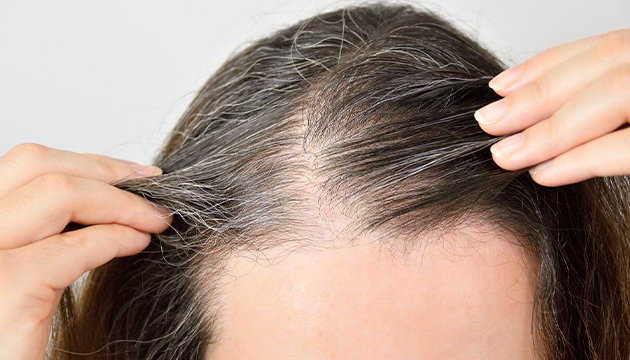
| Androgenetic alopecia | Widening part, thinning crown | Hormonal (androgens), genetics |
| Telogen effluvium | Diffuse shedding across the scalp | Stress, illness, nutritional deficiency |
| Alopecia areata | Patchy, circular bald spots | Autoimmune |
| Traction alopecia | Along the hairline | Tight hairstyles, extensions |
| Scarring alopecia | Permanent patches | Lupus, lichen planopilaris |
The Most Common Reasons
1. Hormonal Imbalances
The most significant category for women. Hormones directly regulate the hair growth cycle.
- Androgenetic alopecia – excess androgens (even at normal levels in women sensitive to them) shrink hair follicles over time
- PCOS – elevated androgens cause diffuse thinning and hairline recession
- Postpartum hair loss – estrogen drops sharply after delivery, triggering mass shedding 2-4 months postpartum
- Perimenopause and menopause – declining estrogen shifts the hair cycle toward shedding
- Thyroid disorders – both hypothyroidism and hyperthyroidism cause significant hair thinning
2. Nutritional Deficiencies
| Deficiency | Impact on Hair |
|---|---|
| Iron / ferritin | Most common nutritional cause; ferritin below 70 ng/mL impairs hair growth |
| Vitamin D | Low levels associated with telogen effluvium and alopecia areata |
| Zinc | Deficiency disrupts hair follicle cycling |
| Biotin (B7) | True deficiency causes hair loss, though supplementation helps only if deficient |
| Protein | Hair is 95% keratin (protein); severe restriction causes shedding |
3. Physical and Emotional Stress (Telogen Effluvium)
Significant physical stressors push large numbers of hair follicles into the resting (telogen) phase simultaneously. Shedding occurs 2-4 months after the triggering event – which is why the timing often seems disconnected from the cause.
Common triggers:
- Major surgery or hospitalization
- Rapid weight loss or crash dieting
- Severe illness (including COVID-19)
- Emotional trauma, grief, or prolonged anxiety
4. Medications
Several common medications cause hair loss as a side effect:
- Blood thinners (heparin, warfarin)
- Beta-blockers
- Antidepressants (some SSRIs)
- Retinoids (high-dose vitamin A)
- Chemotherapy
- Some oral contraceptives (particularly on discontinuation)
5. Autoimmune Conditions
- Alopecia areata – immune system attacks hair follicles; causes patchy loss
- Lupus – can cause both scarring and non-scarring hair loss
- Celiac disease – through nutritional malabsorption and systemic inflammation
6. Scalp Conditions
- Seborrheic dermatitis (dandruff) – chronic inflammation impairs follicle health
- Tinea capitis (scalp ringworm) – fungal infection causing patchy loss
- Psoriasis – inflammation and scaling can damage follicles
7. Hairstyling and Traction
- Tight ponytails, braids, weaves, and extensions cause traction alopecia – progressive hairline damage from chronic pulling
- Heat styling and chemical treatments cause breakage (not true hair loss from the follicle)
Getting to the Root Cause
A doctor investigating female hair loss will typically test:
- Full blood count – anaemia
- Ferritin – even when haemoglobin is normal, low ferritin causes shedding
- Thyroid panel (TSH, T3, T4)
- Hormones – DHEA-S, testosterone, LH, FSH
- Zinc and vitamin D
- ANA – for autoimmune screening
Treatment Depends on the Cause
| Cause | Treatment |
|---|---|
| Iron deficiency | Iron supplementation (ferritin target: 70-100 ng/mL) |
| Thyroid disorder | Thyroid hormone replacement or management |
| Androgenetic alopecia | Minoxidil, spironolactone, low-level laser therapy |
| Alopecia areata | Corticosteroids, JAK inhibitors |
| Telogen effluvium | Address trigger; hair typically regrows in 6-12 months |
| PCOS-related | Hormonal management + anti-androgens |
Bottom Line
Hair loss in women is rarely one thing – it’s usually a combination of factors that have converged. The good news is that most causes are reversible once found. The most actionable first steps are getting a comprehensive blood panel (don’t skip ferritin), evaluating your recent stress and health history for triggers, and seeing a dermatologist or trichologist if shedding has been significant for more than 3 months.
